

Introducing: GAME TAPE
A search for personality, authenticity and artistry in the world of sports documentary

The documentary has long struggled for artistic recognition compared to its glitzier sibling, the narrative feature film.
It took the Academy 12 years to acknowledge a ‘Best Documentary’ with its first Oscar, and you could forgive early viewers for failing to spot the creativity in films that were little evolved from the newsreel and unfiltered verité.
The awarded subjects were lofty or exotic. Documents of life and death - dispatches from the fields of war, glimpses of far-flung lands, conquest and adventure.
If the documentary was second fiddle to the narrative feature, then the honest grunts of the athlete were trivial compared to the travails of the soldier, explorer or president.
Jump to 2025. Sport is the 9th largest global industry with revenues in the estimated region of $2.65 trillion. There is more commercial and critical interest in the lives of high-profile athletes than at any previous point in history. The stakes have never been higher.
There’s been a boom in commissioning unscripted athlete stories, and it’s no surprise. From flagship documentary biopics, to franchise docuseries like Amazon Prime’s All or Nothing or Netflix’s Untold, Formula 1: Drive to Survive, Break Point, Starting 5 or Quarterback.
Athletes and their management have grown impatient with traditional platforms, abandoning broadcast media to develop their own production outfits, like LeBron James’s Uninterrupted or Gary Lineker’s Goalhanger, launching their own podcasts or YouTube channels to grasp full editorial control (and profits).
Budgets have swollen. View counts have soared. The level of access is unprecedented.
And yet for all the access, we often get almost no insight. Heartwarming family moments are engineered for shoots. ‘Difficult’ subjects omitted. Forensic editing erases any failing or vulnerability.
Searching for personality
As someone whose eyes light up when I see a ‘Controversies’ section on a Wikipedia page, I’ve always been drawn to athletes with personality. Whether they’re outspoken, outlandish, outrageous or simply unpredictable, oddball and prone to esoteric choices.
Under the pressures of elite performance, many athletes have struggled to control their intensity, the personality trait that gives them their sporting edge. A common strategy - and one explored in multiple documentaries - is to create an alter ego: Diego and “Maradona”, Kobe and “The Black Mamba”1, Deion and “Prime”.
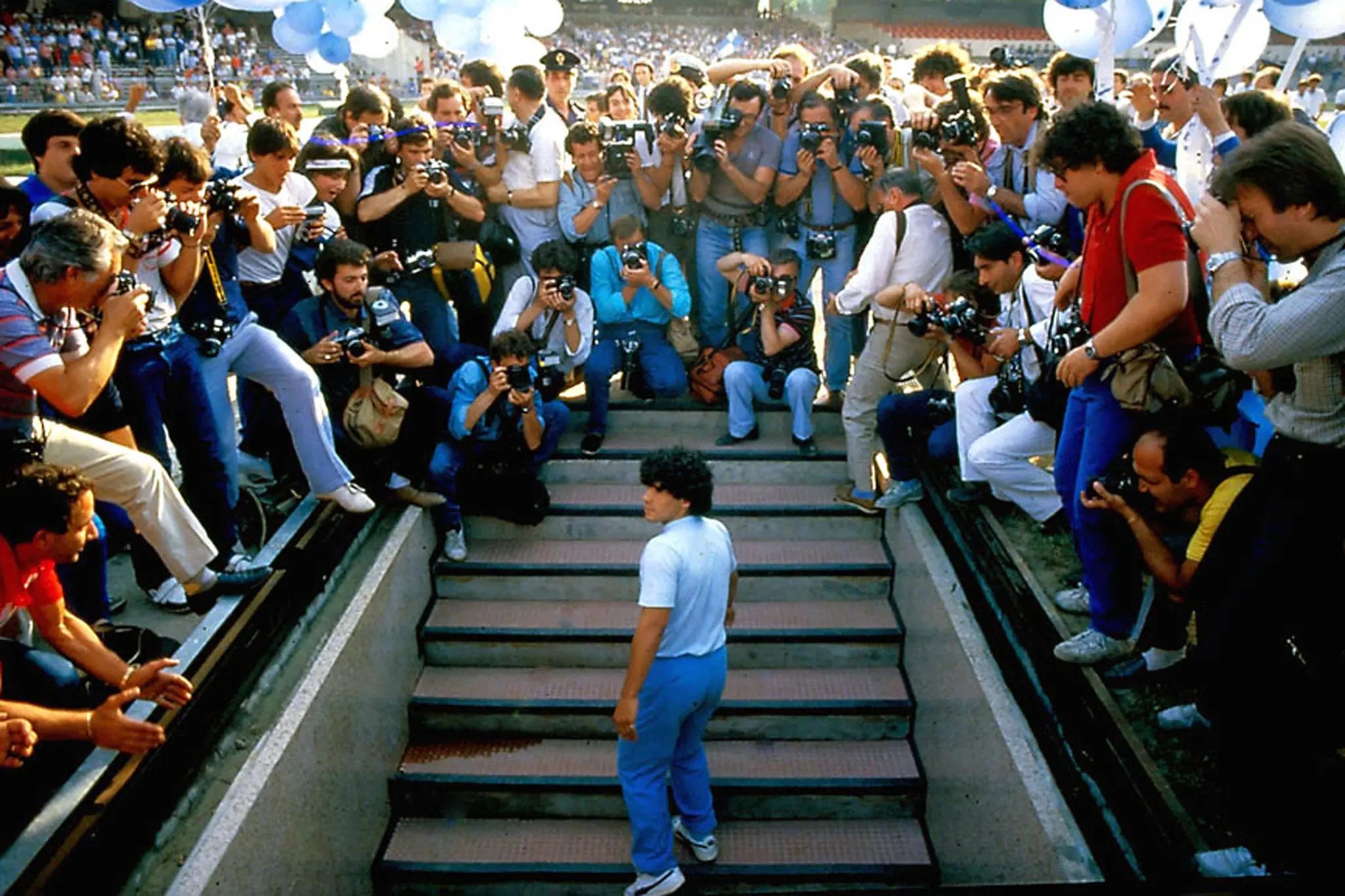
Asif Kapadia, director of Diego Maradona (2019), shared the explanation of Fernando Signorini, Maradona’s personal trainer:
“He said Diego and Maradona were two different people – Diego was the wonderful boy with human insecurities; Maradona was the character he had to come up with in order to face the demands of the football business and the media.”
This dichotomy resembles the dramaturgical theory popularised by sociologist Erving Goffman. The athlete has a ‘performative’ self - the one we see ‘onstage’ in the sporting arena, in front of the cameras, with a microphone in their face. But also a ‘backstage’ self: one they often describe as the ‘real’ them. The version their family and closest friends get, when the cameras are off and the lights go down.
Through the ‘90s and ‘00s, sports coverage increasingly blurred the lines between ‘front stage’ and ‘back stage’ as cameras gained greater access. More of the athlete’s preparation, arrival, pre-game and post-game actions entered the public domain. A momentary lapse in self-awareness could damage the athlete’s self-image and puncture their aura, as Goffman illustrates:
“... in some cases even backstage fraternization may be considered too much of a threat to the show. Thus baseball players whose teams will represent opposing sides of fans are required by league ruling to refrain from convivial conversation with one another just before the game starts.”
Erving Goffman, The Presentation of Self in Everyday Life (1956)
Witness Gary and Phil Neville, brothers, captaining rival teams and studiously avoiding even eye contact as they face up in the tunnel in 2010.
Unpicking this dichotomy is a challenge for any documentarian. But in theory, access to more of the private self should unlock greater insight and reveal aspects of personality viewers might not always see in the sporting arena.
The problem since the mid-00s has been the development of a ‘third self’, maybe termed simply as the ‘Curated Self’. Not all athletes are chronically online, but their image is. Maintained by a persistently pulsing network of social profiles, brand partnerships, PR teams and burner accounts.
This ‘Curated Self’ subsumes the ‘front stage’ and ‘back stage’, as actions are designed to feed it constantly - whether a trademark in-game celly or expertly crafted gender reveal in their back garden at home.
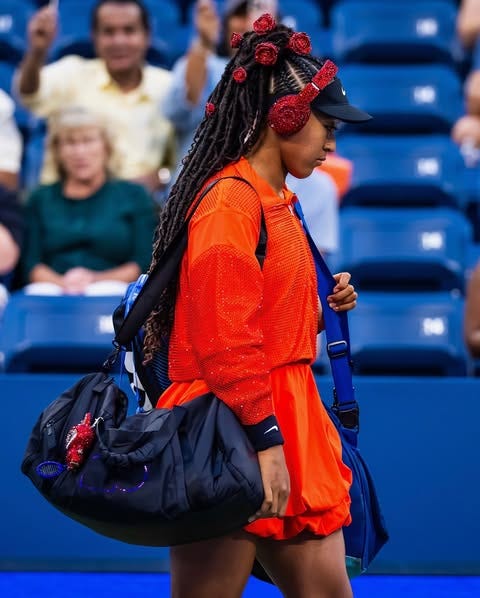
Some athletes attempt to opt out of this game (and in recent years, those athletes have often made for the most interesting documentary subjects). But the game is always on. The most skilled and nuanced documentarians are working overtime to strip the layers and beat it.
“Be honest”
At the heart of the documentary as an artform is a notion of ‘truth’, ‘honesty’ or ‘authenticity’. Not just ‘truth’ as a factual or informational construct, but as epiphany or revelation. What’s ‘true’ often appears as a slip, an accident or aside rather than a direct statement.
“I think all too much of the stuff you see on television is full of bland information that you don’t really necessarily need to know. Or it would be much more fascinating to learn it in a different way. A seemingly oblique bit of information or an impression would actually give you much more of a sense of cracking something open and getting to the heart of something.”
Nick Broomfield, This Much Is True: 14 Directors on Documentary Filmmaking (2012)
Multiple tropes of the modern sports documentary or docuseries mimic a notion of ‘authenticity’ but fail to deliver this essence of truth:
Scenes of ‘constructed’ reality, or choreographed re-enactments of events
Talking head interviews with planned responses and camera self-awareness
Faked insert moments designed to suggest spontaneity or freeform
An athlete still active in their career will face challenges in speaking certain truths. Their media training may curb any tendency to share personal beliefs, negative reactions or controversial opinions. In team sports, they will be unlikely to speak a truth that might jeopardise relationships. Some athletes become so desperately agreeable, they can’t keep track of the lies they tell - as the LeBron meme goes.
A retired athlete might feel unburdened of some of these responsibilities, in front of an interviewer. The gloves are off. Scores can be settled. But the question of legacy looms nearer. There may be ‘no go’ areas, chapters they want omitted from their final story.
Beckham (2023) briefly punctures its own format to assert its ‘truthiness’. Director Fisher Stevens, the pencil-necked Hugo from Succession, “tried everything in his power” to keep David and Victoria separate.
“[Fisher] apparently wanted me out the house, and that particular day was Victoria’s first day of filming. She was sat there, doors closed, and then I was about to leave for the office, but I made a coffee. And I heard Fisher talking about, you know, the whole, our parents and our upbringing, and then all of a sudden, I heard her say, ‘You know, we’re just... working-class.’ At that moment, I was like, okay”
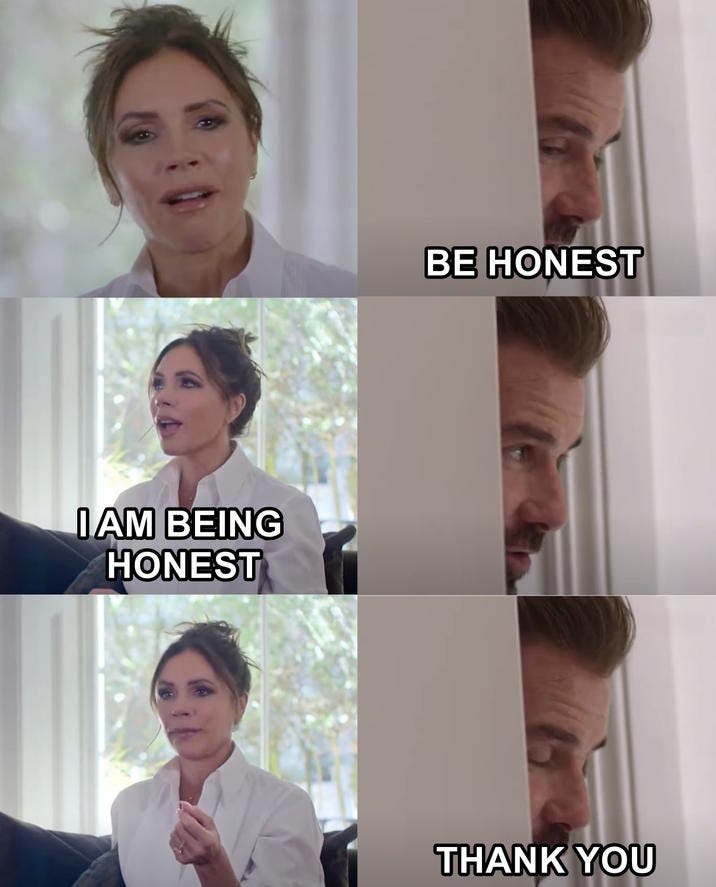
This insert scene and its subsequent lore is designed to assert the honesty of the surrounding content. But its afterlife in internet culture demonstrates an audience awareness - we know there’s something meta in its commentary about the ‘honesty’ of a narrative that refuses to even mention by name (Rebecca Loos) its greatest antagonist.
When verbal constructs can obfuscate the truth, sometimes the athletes who say nothing - or eschew the interview practice - can reveal the most. From taciturn giants like Nikola Jokić and Tim Duncan, to Zinedine Zidane hiding out, tight-lipped, by a Swiss lake after the 2006 World Cup Final, to Marshawn Lynch, the subject of David Shields’s Lynch: A History (2019), who used a mixture of silence and repetition to register protest.
The documentarian who’s dedicated to revealing a ‘truth’ and presenting authenticity is alert to these traps and will deploy techniques in interview, archival research and edit, to prevent their subjects using words to hide in plain sight.
Something ecstatic
Ultimately the greatest sporting moments are about transcendence. When a lifetime of sacrifice and hard work yields the biggest rewards, the result can be ecstatic. Indescribable. Words can’t do it justice.
There is so much poetry in what the human body can accomplish. Sometimes it’s best to simply let the action speak for itself.
Too much of what’s currently classed as sporting documentary follows both an identikit format and aesthetic. Not just the set pieces and talking head interviews, which reduce stories to the pedestrian. But a big, glossy flatness derived from sports broadcasts. An absence of artistry, surprise or risk taking in style. It does the work of its subjects - with the endless skill and creativity they bring to their sports - a great disservice.
There are countless alternative realities. Look at the wordless adoration of Zidane: A 21st Century Portrait (2006). The majestic rhythm and composition of Olympic films such as Tokyo Olympiad (1965) and Marathon (1993), capturing the concerted effort of nations. The psychedelic animation of Doc Ellis & The LSD No-No (2010). Or the levitating awe of Werner Herzog’s The Great Ecstasy of Woodcarver Steiner (1974).
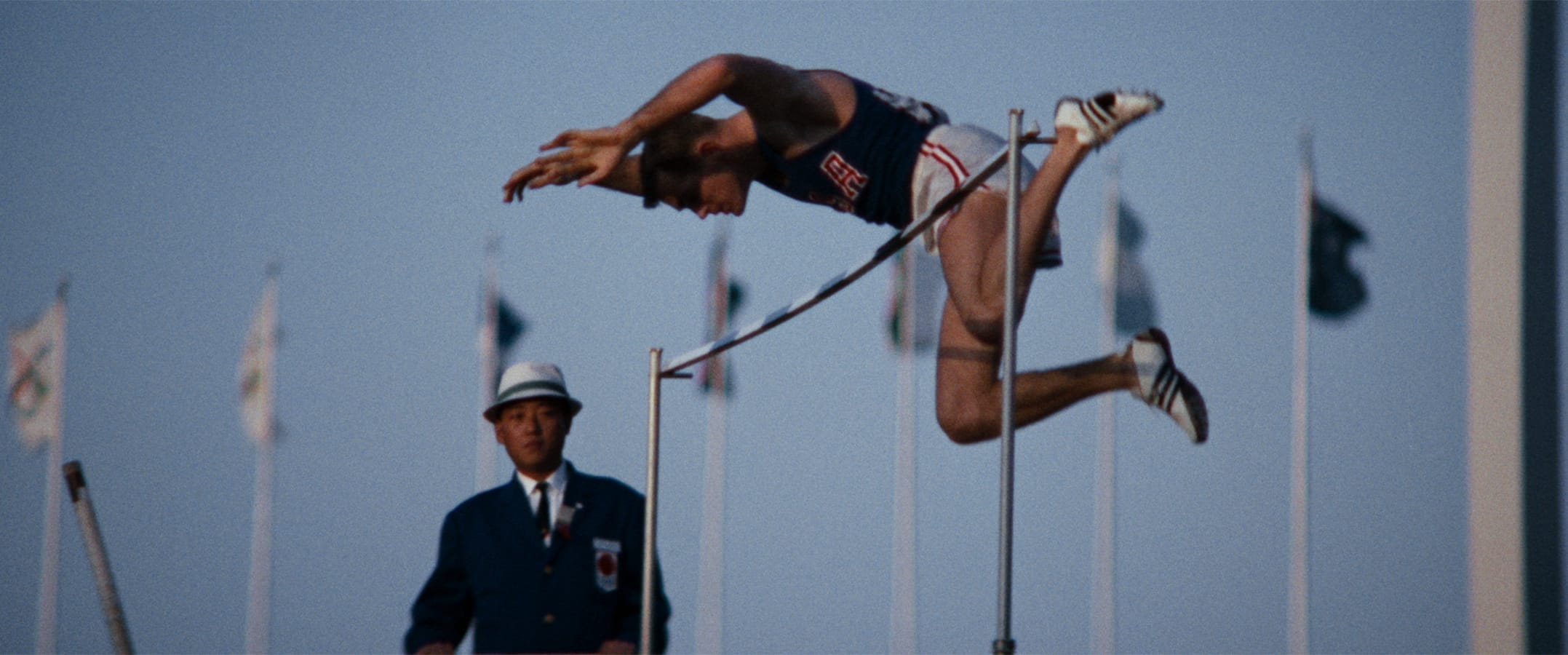
“This quiet young man had something ecstatic in the way he flew, though technically he still had flaws. I told my friends: “This is a future world champion.” His shape was unusual too; he was very tall and thin, with legs that were far too long; he seemed clumsy on the ground, like a crane picking around on bony legs with knobbly knees, but once airborne—he sailed like a crane. His element seemed to be the air, not the earth.”
Werner Herzog, Every Man For Himself and God Against All: A Memoir (2022)
Even the simple act of pointing the camera in a different direction, to an unseen, unknown, or forgotten subject, can be a radical act of artistic revelation. There are beautiful documentaries, too, about athletes whose jerseys aren’t retired, and whose names don’t hang in the rafters.
Who, what and why
The intention of GAME TAPE is to explore this alternative reality of sports documentaries and celebrate the finest achievements in the field. If this intro feels critical of the modern landscape, it’s not the tenor of future posts - I’ll be looking to recommend and spotlight filmmaking that I’ve loved from different eras, including contemporaries, and directors who deserve greater credit.
I’m someone who’s written and co-directed a documentary about a skiing world record (gone wrong) - Kevin Rolland: Résilience (2022) - which aired on Eurosport and won a couple of festival awards. I wouldn’t claim to be a documentarian, or that awards mean anything much, but I have some practical knowledge of what goes into making a sports documentary and the decisions a director has to navigate.
My background is more in working with athletes via brands, such as Nike, Beats by Dre, Under Armour and Airbnb, including sponsorship content for events like the Olympics.
In my notes, you can expect me to interrogate some of these intersections between brand, image management and partnerships in relation to the bigger picture. I believe that commercial interests can provide unique filmmaking opportunities but also damage the artistic integrity of documentaries. It’s not a tension I’ll shy away from.
I’m hoping to interview a range of the players from across the spectrum as things develop - directors, athletes and image gatekeepers - to gain more insight into the BTS details that make documentaries breathtaking, or otherwise.
If you like the sound of that, please feel free to subscribe and expect something in your inbox roughly every week or two. And if you have suggestions about future films or subjects you’d like to see covered, please get in touch - I’d love for this Substack to be a resource and platform for discovery, for me, as much as you, the reader.
Kobe’s ‘Black Mamba’ alter ego was so intentional he engaged a performance coach for the task between 2003 and 2009. Todd Herman has authored a book about this process, The Alter Ego Effect (2019), detailing his work with Kobe and other clients.
weird—my wife and i were talking about this exact thing last night. the netflixification of documentary style (especially sport docs). a flattened format and glaringly obvious playbook of builds and drops (like a very shit edm set). done with a level of cinematography that should feel epic and impressive, but leaves me feeling cold and unsatisfied. like i've been duped, and i can't tell if what i'm watching is interesting or not.
this is stack i didn't know i needed!